Year-round sun protection for healthier skin

6 Minutes

Team Curative

Jun 23, 2026
Your skin is the largest organ in your body and one of the few you can actually watch change over time. People have prioritized cared for it for centuries, and for good reason: the choices you make today show up on your skin for years to come.
It's easy to treat sun protection as a summer-only habit, like something you reach for at the beach or the pool. But ultraviolet (UV) rays reach your skin every day of the year, even when it's cloudy or cold. Building a few simple habits into your everyday routine, and pairing them with regular preventive care, is one of the best things you can do for your long-term skin health.
What is UV radiation, and why does it matter?
Ultraviolet radiation is a type of energy produced by the sun. You can't see it — its wavelengths are shorter than visible light — but it reaches the Earth's surface and affects your skin in ways you can't always feel right away. A small amount helps your body make vitamin D, which supports healthy bones. Too much, though, significantly raises your risk of skin damage and skin cancer. UV radiation also comes from human-made sources like tanning beds.
There are three types of UV rays:
- UVA is the most common type that reaches us. It penetrates below the top layer of skin, where it can damage connective tissue and contribute to wrinkles, tanning, burning, and a higher risk of skin cancer.
- UVB doesn't reach as deep, but it's a major cause of sunburn and can also lead to some skin cancers.
- UVC is absorbed by the Earth's atmosphere before it reaches us, so it isn't a concern.
UV intensity does climb in the warmer months and is strongest between 10 a.m. and 4 p.m., so it's worth being extra mindful then. But because exposure adds up over a lifetime — including everyday moments like driving, running errands, or sitting near a window — year-round protection matters more than any single season.
How too much sun affects your skin
Sun exposure causes permanent changes to your skin, and much of the damage builds quietly over time before you ever see it. Over the years, too much UV exposure can speed up aging and increase the risk of:
- Skin cancer
- Wrinkles and premature aging
- Freckles and age spots
- Skin discoloration or uneven pigmentation
UV light breaks down a fiber in your skin called elastin . As elastin weakens, skin starts to sag and stretch and loses some of its ability to bounce back. Over time, sun damage can also lead to precancerous spots (actinic keratosis), cancerous lesions, visible blood vessels, and eye problems like cataracts.
It's worth taking seriously: skin cancer is the most common cancer in the United States — more people are diagnosed with it each year than all other cancers combined, and about 1 in 5 Americans will develop skin cancer by age 70. The encouraging part? When melanoma is caught early, the five-year survival rate is 99 percent. Prevention and early detection make an enormous difference.
Everyday habits that protect your skin
You don't need a complicated routine to protect your skin. The Skin Cancer Foundation recommends a few straightforward habits you can use all year:
- Wear a broad-spectrum sunscreen (one that protects against both UVA and UVB) with an SPF of 30 or higher every day. For longer stretches outdoors, choose a water-resistant SPF 50 or higher.
- Apply about an ounce — roughly a shot glass full — 30 minutes before heading outside, and reapply every two hours, or right after swimming or sweating.
- Seek shade when you can, especially between 10 a.m. and 4 p.m.
- Cover up with clothing, a broad-brimmed hat, and UV-blocking sunglasses.
- Skip tanning beds entirely.
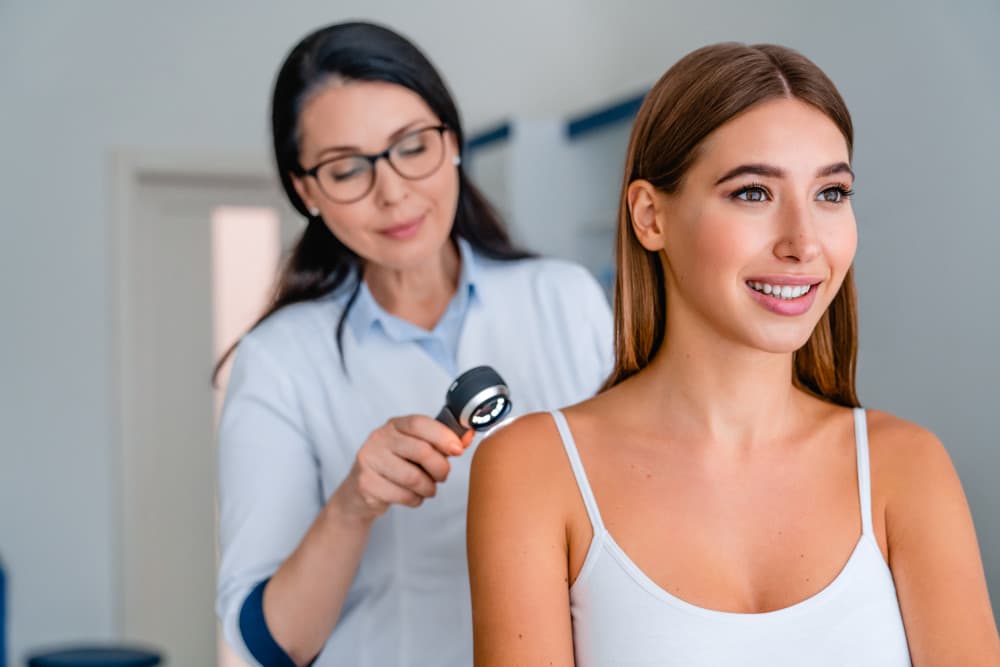
- Check your skin head to toe regularly, and see a dermatologist for a professional skin exam at least once a year.
The National Weather Service adds a few more tips for time spent outdoors: take extra care near water and sand, which reflect UV light and increase your risk of burning; check the daily UV index and follow the EPA's recommendations when the number is high; and keep babies under six months out of direct sun, protected by clothing and shade. Your skin still needs a little sunlight to help make vitamin D, so the goal isn't to hide indoors — it's to avoid overexposure.

Why regular care makes a difference
Sun damage adds up over the years — from long days outdoors to small, routine moments like gardening or walking to the mailbox. That's why prevention matters so much, and why having a provider you see regularly is so valuable.
Each year in the United States, an estimated 6.1 million people are treated for skin cancer, at a cost of about $8.9 billion. Routine preventive care — check-ups, screenings, and honest conversations with your provider — is one of the best ways to stay ahead of skin problems, whether you're trying to avoid them or already managing a concern.
When you see a provider regularly, you can expect guidance on limiting UV exposure, advice on the warning signs to watch for, and skin cancer screenings when they're needed. An ongoing relationship helps, too: a provider who knows your history is more likely to notice subtle changes. As dermatologist Dr. Bruce Brod explained in a resource from the American Academy of Dermatology, your skin can reveal a lot about your overall health — including how much sun exposure you've had, visible in things like wrinkles, spots, uneven pigmentation, and loss of elasticity.
How Curative supports your skin health
Ongoing care is easier when your health plan actually supports it. Curative is group health insurance built around preventive care with transparent pricing, straightforward benefits, and real support mean you can focus on your health, not the paperwork.
With Curative, an ongoing relationship with a primary care provider means you get guidance on preventing and caring for sun-related skin conditions. Curative also covers teledermatology visits and dermatology screenings, so caring for your skin fits into your life. Have a new rash, spot, or skin concern? You can connect with a provider through Curative Telehealth — often in less than 10 minutes — or find an in-network dermatologist when you need a closer look.
Here's how it works:
- Get covered by Curative. From day one, you start with $0 [TOOLTIP: $0 disclaimer — to be added in Contentful] out-of-pocket costs for covered, in-network care and preferred prescriptions.
- Complete your Baseline Visit within the first 120 days, and once a year after that, to keep those benefits in place. It's a confidential check-in that won't affect your premiums.
- Get to know your plan and connect with a Care Navigator who can help you make the most of it.
- Keep using your $0 [TOOLTIP: $0 disclaimer — to be added in Contentful] in-network care to stay your healthiest self — in every season.
Your skin protects you every single day. A few simple habits and regular preventive care help you return the favor.
Whether you're exploring Curative for your organization or already covered, the best next step is the same: connect with a provider who knows you, and make preventive care part of your routine. For members: Start with your Baseline Visit: Learn more about getting started with your Baseline Visit. For employers: Offer Curative to your employees.
.
References
- Smithsonian Institution. Skin Care — Health, Hygiene & Beauty. https://www.si.edu/spotlight/health-hygiene-and-beauty/skin-care
- Cleveland Clinic. Ultraviolet Radiation. https://my.clevelandclinic.org/health/diseases/10985-ultraviolet-radiation
- City of Hope / Cancer Treatment Centers of America. UV Rays and Cancer. https://www.cancercenter.com/cancer-types/skin-cancer/risk-factors/uv-rays
- Skin Cancer Foundation. Skin Cancer Facts & Statistics. https://www.skincancer.org/skin-cancer-information/skin-cancer-facts/
- Skin Cancer Foundation. Sun Protection. https://www.skincancer.org/skin-cancer-prevention/sun-protection/
- National Weather Service. Heat and UV Safety. https://www.weather.gov/safety/heat-uv
- U.S. Environmental Protection Agency. UV Index Scale. https://www.epa.gov/sunsafety/uv-index-scale-0
- CDC, National Center for Chronic Disease Prevention and Health Promotion. Health and Economic Benefits of Skin Cancer Interventions. https://www.cdc.gov/nccdphp/priorities/skin-cancer.html
- American Academy of Dermatology. What Your Skin Can Tell You About Your Overall Health. https://www.aad.org/public/diseases/a-z/skin-overall-health


Sign up for our Newsletter
Table of Contents
What is UV radiation, and why does it matter?
Why regular care makes a difference
How Curative supports your skin health