Skin cancer screening: what to know and how to get started

3 Minutes

Team Curative

Dec 12, 2025
Skin cancer is the most common cancer in the United States, and early changes often cause no pain or symptoms. A quick visual skin exam with a clinician or dermatologist can help detect new or changing spots early, when treatment is most effective and easiest.
Understanding how and when to get screened can help you stay confident and proactive about your skin health.
You will learn:
- What skin cancer screening is and why it matters
- Who needs screening and how often
- What to expect during a clinical skin exam
- How Curative supports screening and helps you get started
What skin cancer screening looks for
A skin cancer screening is a painless, head-to-toe visual exam that checks for new or changing moles, spots, or lesions. Clinicians look for features that may suggest:
- Basal cell carcinoma
- Squamous cell carcinoma
- Melanoma
- Precancerous lesions (such as actinic keratoses)
Screenings are quick and completely non-invasive.
Who should get screened?
Clinical guidelines recommend that adults age 20 and older receive skin cancer screening as needed based on their risk, with annual checks for higher-risk individuals.
Clinicians may recommend regular skin exams if you:
- Have a family or personal history of skin cancer
- Have many moles or atypical moles
- Have fair skin or sunburn easily
- Use tanning beds or have high lifetime sun exposure
- Have weakened immune function
- Notice a new, growing, or changing spot
Why screening matters
Skin cancer is highly treatable when found early. Screening helps by:
- Detecting suspicious moles or spots before they become dangerous
- Allowing for quick removal or biopsy
- Helping track changes over time
What to expect during a skin exam
- You remove clothing as needed.
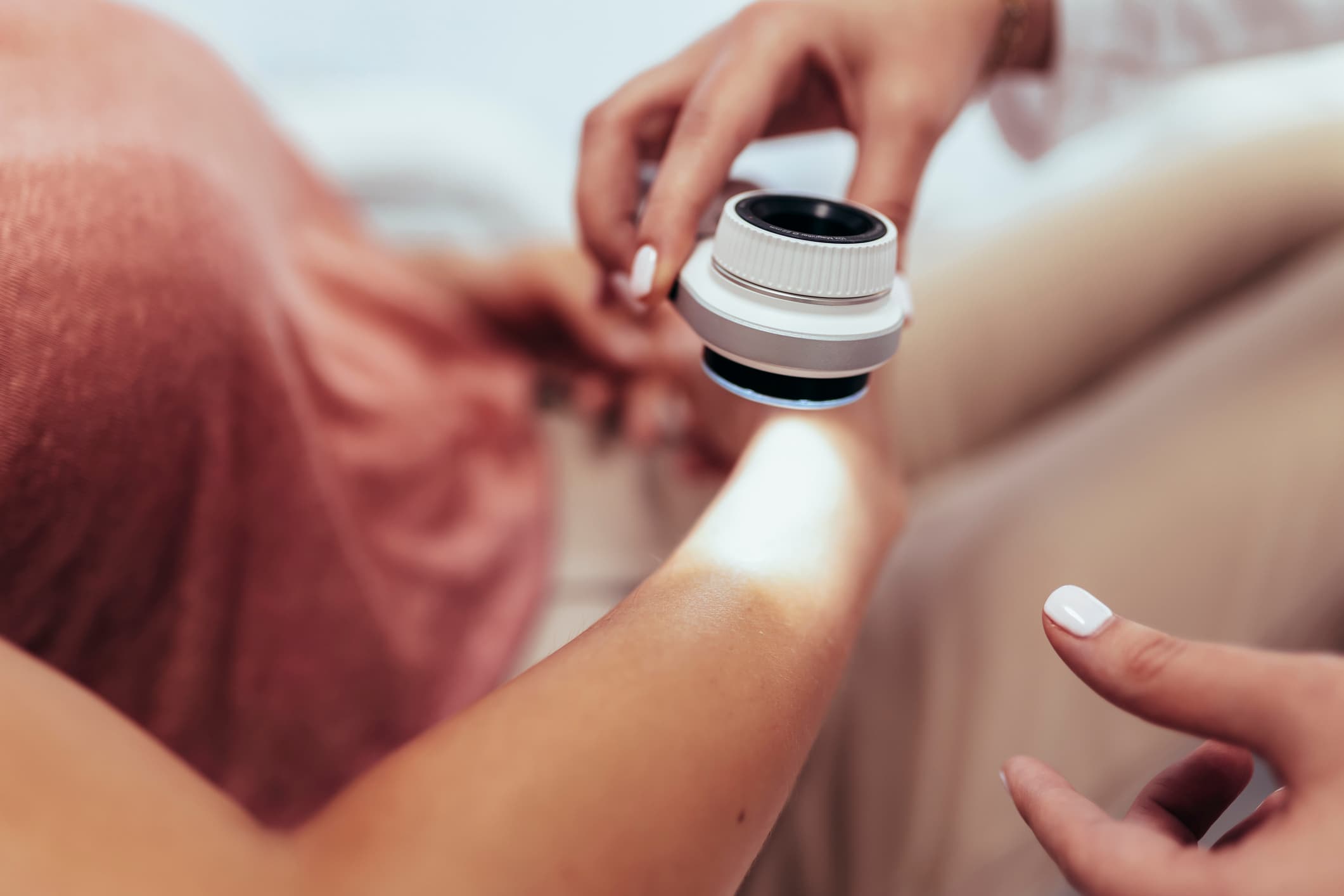
- The clinician examines your skin from head to toe using good lighting and a dermatoscope.
- They may document spots with notes or photos.
- If something looks suspicious, a biopsy or follow-up may be recommended.
The exam is quick, thorough, and pain-free.
Where you can go for screening
You can receive a skin exam through:
- A dermatologist
- A primary care clinician
- Certain specialty clinics
Curative members can search by name, specialty, or location here on our provider search tool.
How Curative supports your screening
Curative helps make preventive care simple.
With Curative, you get:
- $0 cost-sharing for eligible preventive skin exams
- Guidance during your Baseline Visit
- Support to find providers
Frequently Asked Questions
How long does a skin exam take?
Usually 10–20 minutes.
Does it hurt?
No—screening is completely visual.
What if something unusual is found?
Your clinician may recommend a biopsy or dermatology follow-up.
How do I get started through Curative?
Visit our provider search tool or contact your Care Navigator.
Skin cancer screening is a simple, effective way to protect your health. A quick exam can catch changes early. Curative supports you with $0 cost-sharing, streamlined referrals, and a preventive-first approach.
Ready to take the next step? Access our provider search tool.


Sign up for our Newsletter
Table of Contents
What skin cancer screening looks for
Who should get screened?
Why screening matters
What to expect during a skin exam
Where you can go for screening
How Curative supports your screening
Frequently Asked Questions