Cervical cancer screening: what to know and how to get started

4 Minutes

Team Curative

Dec 23, 2025
Cervical cancer is one of the few cancers we can often prevent with routine screening. Early cell changes tend to develop slowly, and a Papanicolaou test (Pap test) or a human papillomavirus (HPV) test can identify them long before they become a concern.
Understanding how and when to get screened can help you stay confident and in control of your long-term health. In addition to screening, the HPV vaccine plays an important role in prevention. It protects against the most common HPV types responsible for about 90% of cervical, vaginal, vulvar, anal, and penile cancers. Discuss with your doctor if the HPV vaccine is right for you.
You will learn:
- What cervical cancer screening is and why it matters
- Who needs screening and how often
- What to expect during testing
- How to find a provider and book an appointment
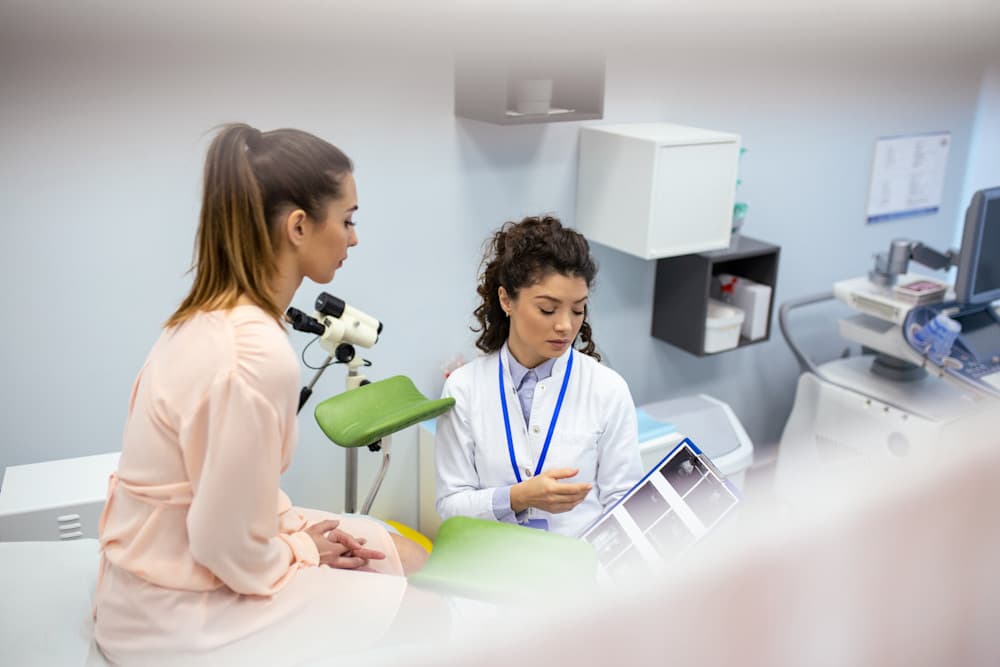
What cervical cancer screenings look for
Cervical cancer screening checks for early cell changes that could become cancer if not monitored or treated. Screening typically involves one or both of the following:
Papanicolaou Test (Pap Test)
A Pap test looks for abnormal cells on the cervix. Detecting these early helps prevent cancer from developing.
Human Papillomavirus (HPV) Test
The HPV test looks for certain types of human papillomavirus that can lead to cervical cancer if they persist over time.
Using both kinds of information gives your provider a fuller picture of your cervical health.
Who should get screened?
Guidelines recommend routine screening for most adults with a cervix ages 21–65. According to USPSTF, screening can be done every 3 years with a Pap test alone or every 5 years if using HPV testing (alone or with a Pap).
The schedule generally includes one of the following:
- A Pap test alone at regular intervals
- An HPV test alone at regular intervals
- Co-testing (Pap + HPV) based on provider recommendation
Your timing may be different if:
- You’ve had abnormal results in the past
- You have a weakened immune system
- You’ve had certain surgeries
- Your clinician determines you need more frequent follow-up
Why screening matters
Cervical cancer often develops slowly. That means:
- Early cell changes are treatable
- Most issues can be caught long before symptoms appear
- Screening helps prevent cancer, not just detect it
Research consistently shows that routine screening dramatically reduces cervical cancer rates.
What happens during a screening appointment
Many people are surprised by how quick the appointment is. Here’s what usually happens:
- You lie comfortably on an exam table.
- The clinician uses a speculum to gently open the vaginal canal.
- A small brush collects a sample of cells from the cervix.
- The sample is sent to a lab for review.
Most people feel only brief pressure. If you feel nervous or unsure, your provider can talk you through the steps and help you stay comfortable. Some clinics also offer a self-collected HPV swab, which you can do privately in the clinic. If you prefer this option, ask your doctor whether it’s available and if it is the best choice for you.
Where you can go for screening
You can have a screening at:
- A primary care office
- An OB/GYN clinic
- Women’s health centers
- Some community clinics
Curative members can search by specialty, location, or name using the provider search tool.
Frequently Asked Questions
How long does a screening take?
The collection part is usually just a few minutes.
Does the test hurt?
Some people feel mild pressure, but it should not be painful. Speak up if you're uncomfortable.
Do I need screening if I feel fine?
Yes—early cell changes rarely cause symptoms.
What if my results are abnormal?
Your provider will explain the next steps. Many changes are manageable and do not mean you have cancer.
How do I find a provider through Curative?
Use the provider search tool.
What does the screening cost with Curative?
See an in-network provider, and the screening is $0 out-of-pocket.
Cervical cancer screening is one of the most effective, proven ways to protect your health. A Pap test, HPV test, or both can detect early changes long before they become harmful. And with Curative’s preventive-first model and $0 cost-sharing, taking this step is easy and accessible.
Ready to schedule a screening? Find an in-network provider and book a visit using the provider search tool.


Sign up for our Newsletter
Table of Contents
What cervical cancer screenings look for
Who should get screened?
Why screening matters
What happens during a screening appointment
Where you can go for screening
Frequently Asked Questions